
Blog
Unconsented Tiled Shower? What Auckland Homeowners Need to Know
31 Aug 2026
Changed an acrylic shower to tile? Learn when consent may be required, what a Certificate of Acceptance involves, and what sellers should do next.
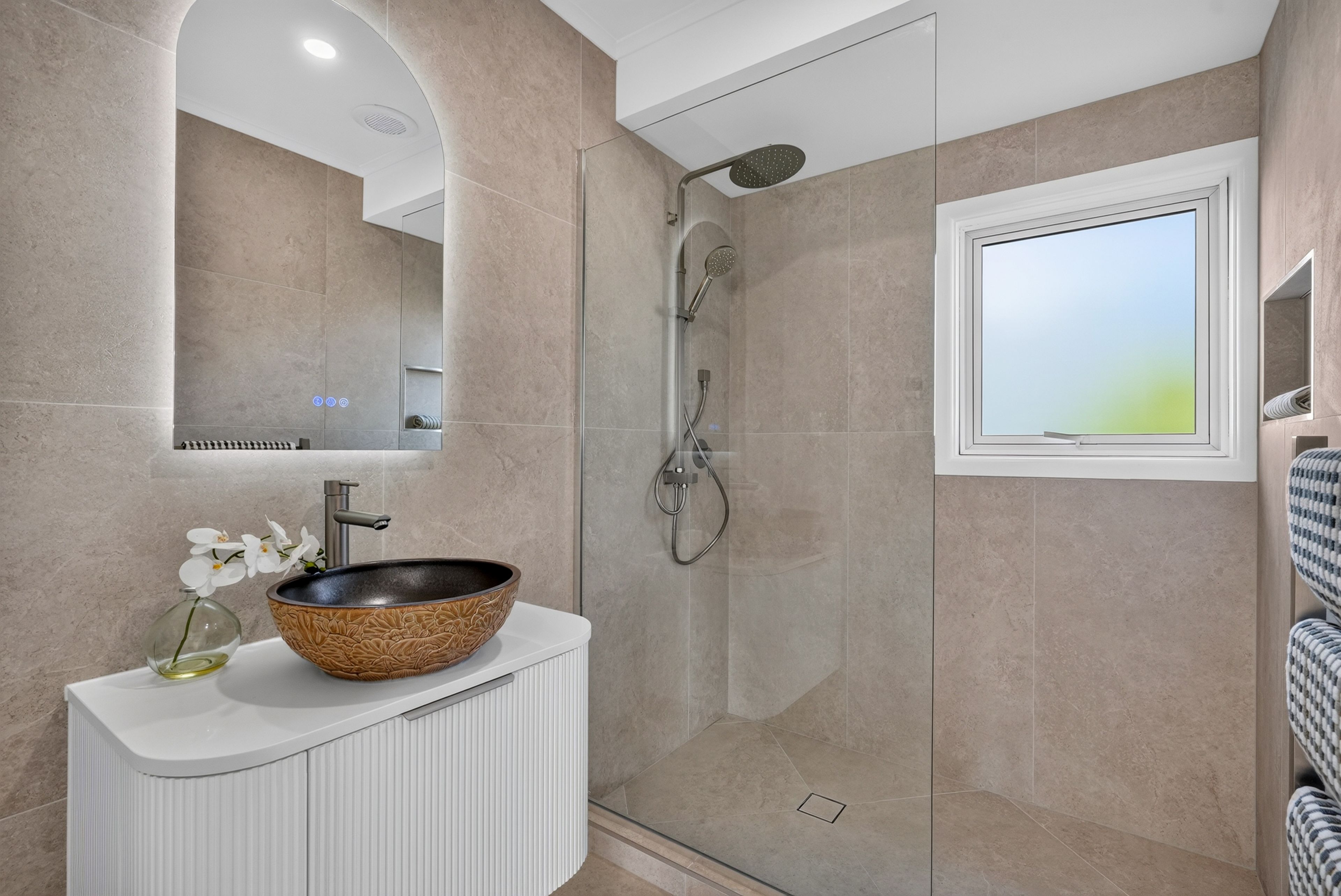
A tiled shower can look like a straightforward bathroom upgrade. But if an older acrylic or plastic shower tray and liner has been replaced with a site-formed tiled shower, the work may have required building consent—even if the shower stayed in exactly the same place.
This often comes to light when a property is being prepared for sale. The bathroom looks great, but the tiled shower does not appear on the council plans and the owner cannot find a consent, waterproofing record or plumbing documentation.
That does not automatically mean the shower is defective. It does mean the owner, buyer and their advisers may have questions about what was installed, whether consent was required and what can now be verified.
Does changing an acrylic shower to a tiled shower require building consent?
In most cases, changing a proprietary acrylic shower enclosure to a site-formed tiled wet-area shower should be treated as work requiring building consent.
The distinction is important. Schedule 1 of the Building Act allows some alterations to existing sanitary plumbing to be completed without consent, provided an authorised plumber carries out the work, the number of sanitary fixtures is not increased and no specified system is affected. MBIE gives the example of replacing an existing bath-and-shower arrangement with a new proprietary shower enclosure and bath as work that may be exempt.
A tiled wet-area shower is different. The tiles are the surface finish; the waterproofing depends on the complete system beneath them. That system may include the substrate, falls, internal corners, penetrations, floor waste, junctions and a liquid- or sheet-applied waterproofing membrane. MBIE's Schedule 1 guidance has specifically identified the installation of a tiled wet-area shower as work requiring consent because it involves critical building work beyond sanitary plumbing, including carpentry and waterproofing.
The consent question is therefore not simply, “Are the walls tiled?” It depends on the full scope of the work. A like-for-like repair, a proprietary enclosure and a site-formed tiled shower are not necessarily treated the same way. If there is any doubt, ask the relevant council or a suitably qualified building professional before work begins. A council may also consider a discretionary exemption for proposed work, but that is not a retrospective solution after unconsented work has been completed.
Why does the waterproofing matter?
Building Code clause E3 deals with internal moisture. A tiled shower also raises durability requirements under clause B2 and, depending on the plumbing and drainage work, requirements under clauses G12 and G13.
The tiles and grout are not the waterproofing system. The concealed membrane and the way it connects to corners, penetrations, the floor waste and surrounding building elements are critical. Once the tiles are installed, much of that work can no longer be seen.
That is why renovation photographs, product information, flood-test records and documentation from the original waterproofing applicator can be so valuable.
What is a Certificate of Acceptance?
If building work completed on or after 1 July 1992 required consent and no consent was obtained, the owner may be able to apply to the council for a Certificate of Acceptance, commonly called a CoA.
A CoA is not a retrospective building consent and it is not the same as a Code Compliance Certificate. The council may issue one only if it is satisfied, on reasonable grounds and to the extent it can ascertain, that the work complies with the Building Code. Because council did not inspect the work as it progressed, the CoA may be limited or qualified to reflect what could and could not be verified.
Council can also refuse the application if compliance cannot be demonstrated.
What information may be needed for a tiled-shower CoA?
There is no universal three-document shortcut. The required evidence depends on the age, design and condition of the shower, the work that was completed and what council can inspect.
For an Auckland application, the evidence package may include:
the completed application, proof of ownership, applicable fee and an explanation of why a CoA is required
professionally prepared as-built plans and specifications accurately showing what has been constructed
an independent report from a suitably qualified professional addressing the relevant Building Code clauses
details of the waterproofing system, substrate, falls, corners, penetrations, junctions and floor waste
a waterproofing PS3 or installer statement from the person who applied the membrane, where available and acceptable to council
plumbing documentation from an appropriately qualified plumber for the work within their scope
product technical information, warranties and flood-test results
photographs taken during construction, particularly before the membrane was covered by tiles
invoices, delivery dockets and statements from people who carried out or witnessed the work.
Auckland Council's waterproofing PS3 form is intended to be completed by the applicator who carried out the waterproofing. It records the product used, confirms the substrate and application requirements, and requires tiled internal showers and wet areas to have been flood tested.
A PS3 helps, but it is not a guarantee
MBIE describes a producer statement as a professional opinion and one source of evidence a council may rely on. It has no automatic status under the Building Act and does not guarantee compliance.
This matters when a plumber or building professional is asked to sign documentation years after the renovation. Any statement should clearly identify what that person actually installed, inspected or tested. A visual inspection of finished work cannot, by itself, confirm every part of a concealed waterproofing membrane.
A 2026 MBIE determination involving an Auckland shower room is a useful warning. The owners had supplied as-built plans, a building report and PS3 documentation. MBIE later found parts of the work did not comply with clauses E3 and G13, noted that the plans did not accurately reflect the as-built plumbing, and reversed Auckland Council's decision to issue the CoA. Every property is different, but the case shows why accurate plans and properly scoped professional evidence matter.
Can ChatGPT or Claude prepare the as-built drawing?
AI can help turn site measurements and photographs into a rough layout, a drawing brief or a checklist of details to capture. It should not be presented as a substitute for a competent designer or CoA professional.
Auckland Council's guidance says the plans and specifications should be professionally drawn, fully detailed and to the same standard as a building consent application. The person preparing the final package should verify the measurements, construction details and Building Code information rather than relying on an unverified AI drawing.
How long does the process take?
The statutory processing period is up to 20 working days—not 20 calendar days—once a complete application has been accepted.
If council requests further information, the clock stops until that information is supplied. The real elapsed time can therefore be considerably longer, particularly if further reports, opening-up work, testing or remediation are needed.
Auckland Council recommends a pre-application meeting, although it is not mandatory. For a shower with limited records, early advice from an experienced CoA professional can help identify whether there is a realistic pathway before the owner pays to lodge the application.
What does it cost?
Council fees change and should always be checked before applying. As a reference only, Auckland Council's 2025/26 schedule listed a base CoA fee of $1,403 for work valued up to $19,999 and $2,339 for work valued at $20,000 or more. Additional charges could apply.
The council fee is only part of the likely cost. The owner may also need to pay for plans, a specialist report, plumbing or waterproofing investigations, testing, inspections and remedial work.
What if the original paperwork is missing?
Missing paperwork does not necessarily end the process, but it makes the evidence more important.
The first step is usually to obtain the council property file and establish when the bathroom was altered, what the previous plans show and whether any related consent exists. From there, an experienced building surveyor, designer or other suitably qualified CoA professional can assess what is visible, what can be tested and whether limited opening-up is needed.
Do not create or backdate producer statements. If the original tradespeople cannot be found, the professionals engaged now should report honestly on the limits of what they can verify.
Is a safe-and-sanitary report an alternative?
Not for post-1992 work.
In Auckland, a third-party report—often called a safe-and-sanitary report—is the pathway commonly associated with unpermitted work completed before 1 July 1992, when the former building-permit system applied. Council places the report on the property file as a public record but does not check, validate or accept liability for its contents.
A building inspection or specialist report on a newer shower may still help a seller, buyer, lender or insurer understand its apparent condition. However, that report does not regularise post-1992 unconsented work and does not replace a CoA.
What about a B2 durability waiver or modification?
A B2 modification can be relevant in particular cases where building work has already been in service for years and the start date of the Building Code durability periods needs to be addressed. It is not an automatic waiver and it does not prove that a concealed membrane, corner detail or waste connection was installed correctly.
It should not be described as a substitute for a missing waterproofing PS3. Whether any waiver or modification is available or appropriate must be determined by council and the relevant building professional for that specific property.
Is replacing the tiled shower with an acrylic shower the simplest answer?
Sometimes reconstruction is the clearest and most cost-effective solution when the concealed work cannot be verified. That may involve removing the tiled system and installing a compliant proprietary shower enclosure, or reconstructing the shower under a new building consent.
It can be a frustrating result for a seller—and heartbreaking when the tiled bathroom presents beautifully—but it may provide buyers, lenders and insurers with a cleaner and more certain position.
Do not assume that simply swapping back to acrylic will automatically be exempt. The demolition, remediation, plumbing, framing and reconstruction must be considered as a complete scope, and the agreed pathway should be confirmed with council or a qualified professional before work begins.
Why deal with it before going to market?
An unconsented tiled shower does not automatically prevent a sale or mean every bank will decline finance. Different buyers, lenders and insurers assess the risk differently. However, unresolved council records or a lack of evidence can delay due diligence, reduce buyer confidence, affect insurance or finance decisions and weaken a seller's negotiating position.
The best time to identify the issue is before photography and open homes—not after a buyer's lawyer, building inspector or bank finds it under the pressure of a finance or LIM condition.
If you are considering selling and your tiled shower does not appear on the council plans, start by gathering the property file, renovation date, photographs, invoices and trade details. From there, obtain advice from council and an appropriately qualified building professional about the best pathway for your property.
This article provides general information only. It is not legal, engineering, building-control, lending or insurance advice. Building work and evidence requirements are property-specific and can change. Confirm the position with Auckland Council and suitably qualified advisers before acting.
Official sources and further reading
MBIE: Alteration to existing sanitary plumbing—Schedule 1 exemption 35
MBIE: Building work consent not required guidance
MBIE: Certificate of Acceptance
Building Act 2004: sections 96–99
Auckland Council: How unauthorised building work is assessed
Auckland Council: PS3—Waterproofing
MBIE: Producer statements
MBIE Determination 2026/017: Auckland shower-room CoA
MBIE: Modification of durability periods
Auckland Council: Consenting and property-information fees
Next step
Want a local market read?
Get a clear appraisal and recent sales around your address.